Showing posts with label Down's Syndrome. Show all posts

George: I am no Poster Boy

Meet George: I Am No Poster Boy


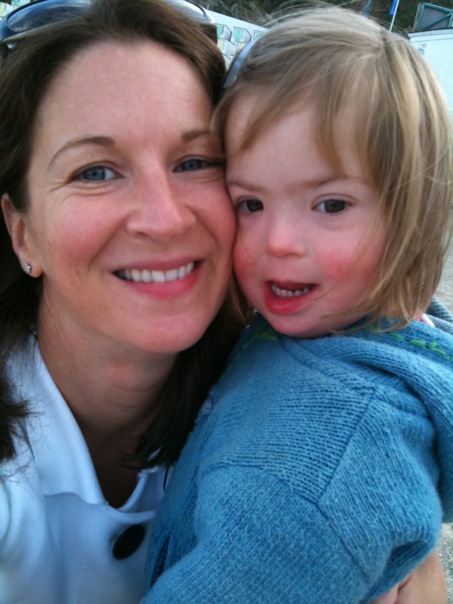
George's Mum Tatty created a Facebook page
called I Am No Poster Boy

Down's Syndrome Diversity

I have always believed in respecting and celebrating the diversity that exists within the Down's syndrome community and I try to show this through a wide range of personal stories on the Downs Side Up Family Stories page. 

Families differ in the range of approaches to life they have, the early interventions they implement, what and how they advocate for their loved ones and even whether they believe an apostrophe or person first language is important or not. The Down's Syndrome Association supports everyone who has Down's syndrome.

Made Possible: Stories of Success
by People with Learning Disabilities in Their Own Words


But it is even more important to recognise and showcase the kaleidoscope of people with Down's syndrome with their infinite combinations of taste, personality, race, culture, sexuality, strengths and needs. There is no such thing as a cookie cutter template for Trisomy 21, and each and every individual has worth and a contribution to make to their family.

Making Chromosomes Count recently ran an article on this important subject in its magazine. 

And social affairs journalist Saba Salman says in her brilliant book Made Possible: Stories of Success, a collection of tales by people with a learning disability, there are many types of success and they come in many forms.

A Mother's Words

So, when George's Mum Tatty got in touch with me to ask if I could help get her son's story our there, I leapt at the chance. Her words and photos lifted my soul, such was the joy flowing from them. Joy, and its twin; love.


George loving life at the beach

Maths Resources for Children with Special Needs

How do you teach numeracy to children 

with special needs? 


Maybe you home educate, or you are home schooling due to Covid, or perhaps you are looking for some fun activities to supplement the work your child is doing in class. 

try to build maths into our everyday lives, to make it fun and relevant for life. Natty is a kinesthetic learner, so I am always looking for innovative ways, such as music, song and movement to increase her confidence with numbers. But it's easy to get stuck in a rut when you plan numeracy activities with your child. I know I certainly do. 

Build literacy and numeracy into your everyday activities
for your child with special needs


So I asked you, our lovely Downs Side Up readers for your suggestions for this crowd-sourced post. And what a resourceful and imaginative lot you are! 

Check out the top tried and tested maths suggestions below. 

Educational Toys


A teaching clock is a great investment


I always look for sturdy, bright and colourful resources, so when t
he wonderful people at Jaques London sent Natty a beautiful wooden teaching clock recently, we couldn't wait to give it a try. I love number kits that can be used in various ways, and this clock doubles as a shape sorter as well. Each shape is a different colour and fits into a slot on the clock face which also features animals and the foods they eat painted inside, providing lots of opportunity for vocabulary development too.

The shapes also thread on to a sturdy string, a bonus fine motor skills activity too! 
Natty loves this teaching clock for telling the time practice, as the hand are easy to move and I love the retro, sustainable packaging it arrived in.

The Importance of Respite and True Friends

It's very easy to say...

I need some respite, a bit of time off, a break, a change, a rest...

We all have very different lives.  

Some of us work, some seek work, others choose to stay at home with young children. Very few parents of children with additional needs can afford extra help, some rely on nearby family to lend a hand. Some of us are lone parents, some lonely within relationships, others are fortunate to find themselves within supportive partnerships, team-tagging their way through the special needs jungle.
But what we all have in common, as parents of children with a disability, is that we need time out in order to recoup our energy levels and enthusiasm. We need regular pitstops in order to be better parents and carers. 

All unpaid carers know we need to nurture ourselves, but time for yourself is really difficult to actually factor in to your life for many reasons, often not least because you don't think you deserve it. Read why it is vital do press the pause button once in a while and have a look at our tips for doing so, in this post created in collaboration with Basubu Yoga Retreats, who know a thing or two about restoring the senses.

Being a special needs parent can be wonderful and exhausting in equal measure

BBC1 Documentary with Sally Phillips Examines Down's Syndrome Screening

We are proud to have played a small part in this forthcoming important programme.

BBC One announce documentary examining Down’s Syndrome screening

0
 BY Lisa McGarry
sally_phillips-6234SMALLRES
Flashmob celebrations in London with Sally Phillips
Dragonfly has been commissioned by BBC One to produce a one-hour documentary that explores the impact of a new screening test that is said to detect Down’s Syndrome in 99% of pregnancies.

National Portage Association Back New Resource

Fink Card Review by Kerry Bailey of the National Portage Association 


Talking About Down’s Syndrome: Conversations for New Parents by Hayley Goleniowska and Fink Cards


Talking About Down's Syndrome: Conversations for New Parents

I was honoured and delighted to be asked to review the new fink conversation cards Talking About Down’s Syndrome, Conversations with Parents written by Hayley Goleniowska.

"Q: How did you celebrate your baby's arrival?"

National News Interviews on Testing and Down's Syndrome


Relaxing with our Girls

"Right girls, lets make some popcorn and go and sit on the sofa and cuddle up." 
It was time to watch Pets with the Xtra Factor Strictly Do the Most Talented Things Whilst Coming to Dine with Me or whatever it is that's on on a Saturday evening these days. Daddy Downs Side Up was away, and we had a girlie evening planned.

We'd been in our pyjamas for the last hour and had just taken our lovingly made meringue for the Big Lunch out of the oven ready for the next day. I was washing the last of the dishes and had poured a glass of something cold, crisp and white in readiness for full relax mode.


An ordinary Saturday turned into a media day in minutes

The phone rang. Thinking it was Daddy, Mia answered it with an excited "Hiya!" Silence while someone spoke on the other end of the line. 

10 Top Speech Therapy Tips for Children with Down Syndrome


The following list of SALT ideas for young children with Down syndrome might help you and your child develop their oral motor skills.


A few of the speech therapy tools for children with Down syndrome
Every child is a unique individual.  Each one develops at their own pace, responds well to their favourite toys and has their own strengths and areas that need support. This is no less true for children with Down's Syndrome, so trust your instincts.

Lose the Label campaign for Person First Language


The poster says it all. 

I am Natty: a little girl first and foremost, with my own unique take on life. 

Yes, I have Down's syndrome, it's an important part of who I am, but it does not define or limit me.

I am not 'a Down's'.

I am Natty.


A few months ago I came across the Lose the Label poster campaign on Facebook (do pop over and join the growing community there), run by the lovely Michelle Clark. It is genius in it's simplicity. She features a wide range portraits of children, babies and young adults all living life to the full, all who have Trisomy 21. In 3 simple phrases she cuts to the heart of what we all strive for for our young people, that they must be taken for who they are, unique individuals as different as snowflakes, and she makes people stop and think about the generalisations and stereotypes they may have believed to be true of those with the condition before. I knew straight away that I wanted to be involved, as Michelle shared my approach to change. Here's why:


"Within hours of Natty’s birth we received the diagnosis that she has Down’s syndrome and a heart condition.  I’m sure many of you reading can relate to the crushing disbelief, the angry grief, the gut-punching shock, the darkest of fears that makes it hard to even simply breathe in and out.

When I look back at that snapshot in time, I understand how, rather than seeing Natalia for exactly what she was, a beautiful yet vulnerable baby, our precious second born daughter, a little sister for Mia, she became in our minds a set of medical complications, a set of symptoms, and worse still, a collection of preconceived stereotypes based on the fleeting glimpses into the lives of adults with Down’s syndrome I had seen in my youth. Our baby became in that moment, Down’s syndrome personified. A one-size-fits-all label.

Looking back with shame, from my privileged current vantage point of knowledge and love, I understand that in many ways this is how society and the medical profession had presented Natalia to me. My own fear and ignorance fed into the myths, but it was my husband who broke through all the labels, simply saying, “She is our daughter, and she will be the very best that she can be.”

Now, 7 years down the line, and Natalia refusing to conform to one single stereotype that had entered my mind that day, I pour as much energy as I can muster into telling the world that our children and young people are all unique individuals with fully rounded personalities who deserve the same rights and opportunities as everyone else. I shout from the rooftops that they take on the values and traits of their own family members and contribute much to the communities around them. Not just ‘cute’ or ‘musical’ or ‘loving’, their voices must be counted. I know now just how wrong I was and I want the truth exposed.

When I came across the inspired work of Lose the Label, I knew immediately that it was something I wanted to be a part of. For together, if we can remove the fear from the hearts of just one new set of parents, to buy them bonding time with their newborn it is worth it. Or if we can shift the thinking of one member of society that will lead them to be more inclusive, then we have improved the life of someone somewhere with Down’s syndrome. And if we can make people stop and think before they label our children, then we have removed one more barrier before them."


If you have a photograph of your child with Down's syndrome that you would like to submit to be included in the campaign, you can write to Michelle via her Lose the Label Facebook page
Images must be high resolution, good quality, landscape and have space for text to one side. 


You might like to read Musical and Loving Aren't They? on the subject of stereotypes and labelling. 


New Dad Talks about Life with Down Syndrome

A few months ago I recieved a beautiful email from Matt's wife Laura. It was the sort of email that makes me realise that I am not writing into a vacuum and that DSU is achieving what I set out to do, to support new parents, let them see that life with Down's syndrome will go on pretty much the same as it did before, only better, despite the health setbacks. I never share emails or comments that are sent privately, but Matt has penned this piece especially for you dear reader. Meet the Horsnells:


I’m new to this…
October is Down’s Syndrome Awareness Month in the US, and many people, some of whom I’ve got to know remotely over the past 8 or so months, have been penning excellent blogs focussing on what DS is, and what life is like for children and adults with DS, and for their friends and families.
One of these people is Hayley Goleniowska. I’ve not yet had the pleasure of meeting Hayley and her family, and the chances are that I would not have even heard of Hayley but I have. I have for two reasons.
The first is because my daughter, Ada, who was born in February this year, was diagnosed postnatally with Down’s Syndrome. Like most couples expecting their second child we were excited, fairly relaxed, and slightly anxious about the onset of life with two children under two. I was expecting a little less sleep, possibly some jealousy from our eldest having to share her mum and dad for the first time, and another couple of months of intense nappy changing.
What I wasn’t expecting was that our baby would be born with DS. Not that it is relevant, but since everyone asks (and please do stop asking parents of new babies) we did have the run-of-the-mill screening, we were considered low risk, and I should imagine like most people we didn’t think anymore of it.
I didn’t even think about it when our baby was born. The birth was incredibly smooth, labour seemed easy enough (from where I was sat!), and Ada was delivered into the world with her amniotic sack intact, something the midwife instantly told us was good luck.
Looking back now, I’m not sure if I started to suspect that something was wrong during the night or during the next day as we were waiting for the all clear to leave the hospital. Her hearing was fine and she’d had some basic tests. Then there was some scuffling by the midwives that they were waiting for someone to listen to Ada’s heart again, as there was a suspicion of a murmur.
What followed, predictable though it is as you read this, came as such a shock to us. 
We were told that our daughter in all likelihood had Down’s Syndrome.

I have never and probably will never feel again the gut wrenching, heart aching flush that took over me in that moment. I could probably tell you exactly what all the doctors, nurses and midwives were wearing, who was standing where and what was still left to pack into our hospital bag such is clarity of the moment when we were told. I won’t dwell on it here, suffice it to say that we were told it straight. It even made some sense when they said it, after all our baby had seemed a little weaker this time, she’d not latched on very well, there was some concern that her eyes were a little puffy and she became incredibly dry during the night.

Looking back, I’m not sure if it was my ignorance to the facts, or that I was suppressing something that I didn’t want to accept. Either way I have never had the earth pulled from under me so quickly as I did that day.
In the hours, days and weeks that followed I did my best to try and understand what Down’s Syndrome really is and what the realities for my daughter were. We are incredibly lucky to have a loving family who really rallied around. My sister and her husband in particular had, to my on-going pride, been very involved with Scope and Mencap for some years and so instantly knew in which direction to point us. We had soon located the very aptly named, Cambridge Baby and Children with Down Syndrome Support Group, and I’d received a second hand copy of Andrew Merriman’s A Minor Adjustment through the post, sadly it is out of print. [A Minor Adjustment has just been released on Kindle - H]
The other source of information we had during the early weeks were blogs, which leads me on to the second and true reason that we have heard of Hayley. Hayley is such a strong advocate for Down’s Syndrome and it was probably through a google search of “Down’s Syndrome Support Blog” that we found DownsSideUp.
Although I had been able to read the literature the hospital had given us, and had managed to read most of the Down Syndrome Association's website for new parents, it was Hayley's blog which instantly struck a chord with my wife Laura. 
Laura had been unable to read anything about DS in hospital until I read her Hayley’s posts. Hayley, like us has two daughters, seemed genuinely nice and was actually getting on with living. I read many of her posts to Laura and we cried out loud together, partly through realisation that we were not alone, not unique, and partly because her blog offered hope, and happy photos and stories as well as facts.
Like Hayley and many, many parents we had our initial problems. Ada had very dry cracked skin, for which we were prescribed pure sunflower oil, olive oil brought her out in a rash, yes we experimented! We had 5 weeks of feeding through a nasal-gastric tube, which was tricky at the best of times, and incredibly, arm achingly slow, but Ada was feisty and really didn’t want the tube in. So, despite being desperate to get out of the hospital after our 8 day marathon just a few days earlier, we started then what has become regular trips to Addenbrooke’s Hospital.
This an extract from an email I sent to my family at the time that sums it up well:
“Ada discharged from neonatal care, as all going well, and had put on another 100g on Wednesday (@25gms/day) so we’re up to 7.5lbs. Now responsibility of health visitor and early years support team.
Lots of appointments arranged... genetic counselling, foetal medicine counselling, counselling, physiotherapy, speech therapy, bonding and attachment therapy, portage, ophthalmologist, heart scan, hip scan, repeat thyroid, baby massage, child development team and last but not least the standard six week check next week."
Fortunately things have calmed down since then and Ada is now nearly 9 months old.

She loves going to Yoga with Mummy, and she started swimming lessons with me a month ago. She is happy and healthy and is the apple of her sister’s eye, who quite often states with pride “You is the best friend for me ever!”. Ada was fully breast fed for 6 months and is now enjoying solids too. She is sitting and just this week started to clap.
We’ve been on a family holiday and, albeit small-scale to the Norfolk Broad’s this year, we’re determined to tackle flying abroad next year if we can. We’ve been camping at a music festival and we’re just about to move house. 
I mention all this, because we nearly lost sight of it all 9 months ago. It just didn’t seem possible. How very wrong we were.


Matt Horsnell - Ada's Daddy
 @maver on twitter


Campaign Bloggers

Blogging with Heart, 

from the Heart and for Support.


It this year's BritMums Live I was honoured to be part of a discussion panel comprising Annie from Mammasaurus, Kylie from Not Even A Bag of Sugar, Liska from New Mum Online and I (Downs Side Up). We joined to share our own takes on the subject, for what proved to be an emotional session for the speakers and those listening. (There were a few tweets at the time about 'dust in people's eyes'.) It seems that there are many differing motives for writing with heart, and that this inspiring variety of blog achieves more than at first meets the eye.

Then last week Jennie Henley who writes Edspire and I were asked to join Jenni Murray for a Live chat on BBC Radio 4 Woman's Hour on a similar topic: Campaign Bloggers
You can still listen to the interview here at 26 minutes.

The BBC researcher was wonderful and we chatted at length on the phone. She asked me to think about why Edspire and my own blog were so successful, how they helped us and others, what brought people back to them? She asked about exactly how Downs Side Up was conceived. She asked what other projects the blog has led to. She asked about the blogs I read for pleasure and why. Of course there wasn't time to talk about all of this on air.

So, for those who couldn't make the session at Britmums, for those who write a blog from their heart, and for those wanting a fuller picture than Woman's Hour had time to allow us, I have tried to summarise what Campaign Blogging is all about.


Why?

There are as many reasons for starting a blog of this nature as there are stories in the world.
  • Annie described wanting to talk through a particularly taboo subject from the safety of her blog, and in doing so she reached out to other women in the same situation who felt alienated, misunderstood and lacking in support. I recall Spencer from A Dad Called Spence saying that if you have changed one person's life through your blog, then it is a success, and Annie's has certainly done that many times over.
  • Kylie also described a lack of support when her son was born prematurely, and her main motive for blogging was as a way of gaining support for herself through that intensely difficult time. Of course she helps thousands of premmie parents now and works for Bliss Charity but that, she claims came afterwards.
  • Liska is a selfless blogger and a shining example of one of many who write to pull others together, to keep the memory of her friend Multiple Mummy alive. She helped organise the #Healing4Kerry time of thought and prayer that many of us joined in, and this must have given comfort to Kerry before she died and to her family ever since. Never is the power of the online family more keenly felt than at times of tragedy.
  • Jennie also writes to create a legacy for one who was taken too soon, her daughter Matilda Mae. She recalls that the writing all started as a way of working through her grief, and in doing so not only does she spread awareness of SIDS, but fundraises tirelessly for the Lullaby Charity. 
  • For me, Downs Side Up was born out of a realisation that my perceived knowledge about Down's Syndrome was completely wrong when Natalia was born. Fear and ignorance made me afraid to love her. I began writing so that no other new parents would ever feel that desperation, to buy them bonding time so to speak, by gently changing perceptions of the condition from within hearts. I spent many evenings researching online following Natty's birth. There weren't any blogs about family life with Down's Syndrome back then. In fact most of what I read was outdated and downright depressing. The charity sites were a font of knowledge but remained neutral in tone. When the time came to write a blog, when Natty had started school and I had time on my hands, I decided to write about exactly what I wanted to find in the early days myself, a positive, realistic portrayal of everyday life and a good dollop of information, resources and ways to get support. I was surprised to find, like Jennie, just how cathartic and healing blogging was. There were, and still are, occasions when I cry as I write, working through some old emotion, guilt or fear which often lies unrecognised until the fingertips hit the keyboard.

Readership?

So who reads these high profile campaign blogs?
  • Being able to share blog posts with family and friends has enabled me to explain feelings that are hard to put into words at the time, or indeed face to face with someone. This works both ways of course, because a blog reader can sit in her pyjamas, with tea in hand, in total privacy and read, at any time of day or night and cry, shake, shout, smile, and whatever she feels remains private
  • I guess that some blogs remain niche, with a small readership and a very specific topic range. I always assumed that Downs Side Up would be read only by family members of those who have DS, and was pleased to find professionals joining the ranks and even more suprised when the majority of readers turned out to be parents with no experience of Special Needs or even those without children at all. This is the point where a campaigning blog becomes powerful. If you can make it relevant for all then you are drawing people in and changing the way they think with a smile or a chuckle or a tear or an ahhh with a tale they can relate to.
  • Again the subject matter of the blog will determine how readers interact with the writer. Some are showered with supportive comments, for others readers prefer to contact the writer privately for support, or indeed to remain anonymous. I was taken aback at Britmums Live for example when a handful of women spoke individually to me to one side about their experiences of testing, screening, terminations, losses and babies and how reading this post or that had supported them or a friend. Unless I had met them I would never have known that, and so we must continue to write the way we do, for we can never sure of the extent of the positive impact it is having on the lives of a significant few.


What makes a successful Support Blog?


As we identified, a successful blog can be one that helps just one person. But what keeps someone coming back to the blogs they know and love?
  • For me the personality of the blogger has to shine through.  I want to read posts from people I would genuinely like to share a coffee or a glass of wine with. Their motives have to remain clear and they must have integrity. It's the blogger who can't tell you how many 10s of thousands of visitors they have each month because it doesn't matter.
  • Many campaign bloggers seem to keep their blogs clear of  too many reviews, sponsored links and advertising. This was my pledge to help the message remain clear, although blogging and the associated travel and outlay leaves many very out of pocket. There is nothing wrong with making money from your blog and perhaps it is simply a balance I haven't managed to strike yet.
  • An appealing campaign blog has mass appeal even if the campaign itself may only affect a few. It all about a balance of posts that capture interest. It will be well written and visually enticing.
  • If you are fundraising, events need to be unique and different and easy for all to join in and give.
  • Although many blogs deal with subjects that would make us all angry I think there is no faster way to make someone switch off to reading than prolonged ranting. Drawing people in to walk alongside you is always more effective than demanding them to do so. It's like the story of the Wind and the Sun having a competition to make a traveller remove his coat. The gentle Sun wins every time over the blustery Wind. If you are working through some emotions that make you angry and blogging helps you deal with that its worth doing just for yourself. You can always hit the delete button later...
  • The most powerful blogs with heart draw people together, through linkies, round-ups, guest posts, interviews, charity events, trips, trending hashtags and so on to make people feel part of a shared goal.
  • I try to visit and support as many other blogs as I can, but I prefer to write without influence from others to keep things unique and fresh. If I am writing about a particular topic I won't read any other blog on that subject until it is finished.


Where do we go from here?


The blog often feels like a hub or central core that all else eminates from. It is an organic force that goes where it is needed.
  • Charities have realised that bloggers are an incredibly powerful tool for spreading their word, raising funds and supporting others. Much of the writing I do is now for charitiy blogs as well as my own. 
  • Then there are articles for newspapers, journals, interviews with the media and requests for quotes and comments. Bloggers are beginning to be considered as writers in their own right.
  • Bloggers with heart are driven to reach out to others and often find themselves doing training or public speaking in workplaces and schools to achieve that. Again, a warm/strong/memorable personality is key.
  • Politicians and parliamentary activists are getting bloggers on board too. The Saatchi Medical Innovation Bill and Disability Abortion Law are two campaigns that I have recently been asked to be involved in.


Who do I read?


Just Bring the Chocolate because she keeps it real.
Pippa Story of Mum because she got me doing craft activities at 43.
Aunty Her Melness Speaks because she is wise and warm and supportive and consistently right. I think she'd tell me off if I did something wrong.
Wally Mummy at Just a Normal Mummy because she says 'vagina' a lot and it makes me giggle like a school girl.